How to Become a Distributor in India
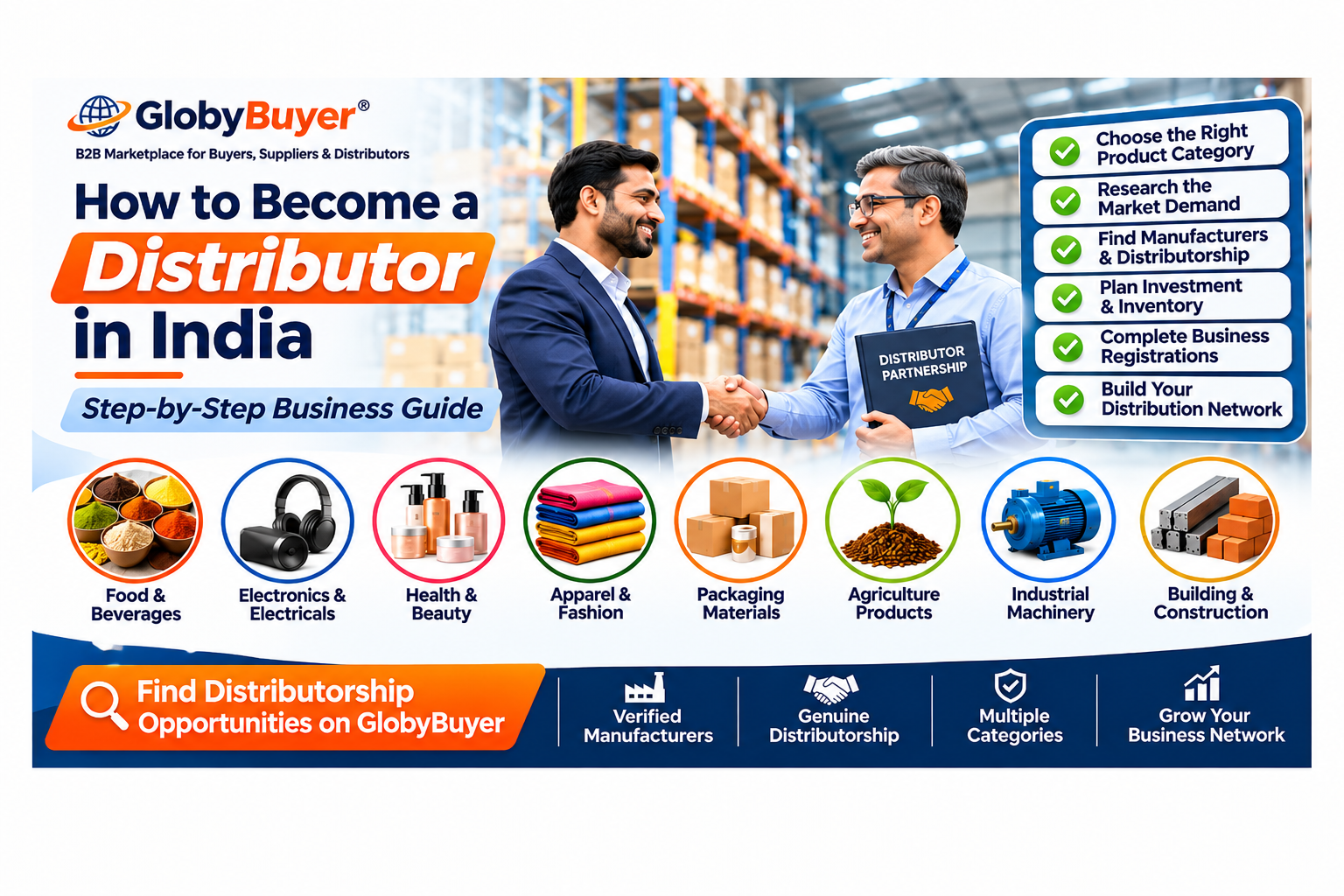
How to Become a Distributor in India – Step-by-Step Business Guide
26 Nov 2026
Starting a distributorship business is an attractive option for entrepreneurs who want to enter the wholesale and B2B trading industry.
Step 1: Choose the Right Product Category
Your first decision should be the product category you want to distribute.
Popular distribution business categories include:
- Food & Beverages
- Health & Beauty
- Electronics & Electrical
- Agriculture Products
- Apparel & Fashion
- Building Materials
- Packaging Products
- Automobile Spare Parts
- Industrial Machinery
- Household Products
Choose a category based on local demand, competition, capital requirements and your ability to reach customers.
Step 2: Understand Your Target Market
Research the market before investing.
Identify:
- Potential retailers
- Wholesale traders
- Institutional buyers
- Existing distributors
- Competitor brands
- Product demand
- Delivery requirements
A product with strong demand in one city may have different sales potential in another market.
Step 3: Find Manufacturers Looking for Distributors
Connect directly with manufacturers and understand their distribution requirements.
Ask manufacturers about:
- Available distributorship opportunities
- Territory availability
- Minimum investment
- Initial stock requirement
- Distributor margins
- Sales targets
- Marketing support
- Payment terms
- Replacement and return policies
Always verify whether the distributorship is officially authorized.
Step 4: Calculate Your Investment
There is no fixed investment amount for every distribution business.
Your capital requirement depends on:
Expense Requirement
Initial stock Product inventory
Warehouse Storage facility
Transportation Delivery and logistics
Staff Sales and operations
Marketing Local promotion
Working capital Daily business expenses
Keep sufficient funds for operating expenses and delayed customer payments. Avoid investing your entire capital in initial inventory.
Step 5: Complete Business Registration
Depending on the nature and scale of your business, evaluate applicable requirements such as:
- Business registration
- GST registration, where applicable
- Udyam registration, if eligible
- Trade licence, where required
- Product-specific licences and approvals
- Appropriate business bank account
Requirements differ by product, business structure and location. Check the relevant government authorities before starting operations.
Step 6: Build a Retailer and Buyer Network
Your distributor business depends on the customers you serve.
Develop relationships with:
- Retail shops
- Dealers
- Wholesalers
- Supermarkets
- Institutional buyers
- Local traders
- Online sellers
Create a regular sales and delivery schedule.
Step 7: Manage Inventory and Credit Carefully
Distribution businesses often operate on working capital and customer credit.
Maintain records of:
- Stock availability
- Purchase orders
- Sales
- Outstanding payments
- Product expiry, where relevant
- Returns
- Delivery costs
Good financial management is essential for sustainable growth.
Common Challenges in Distribution Business
- High competition
- Working capital requirements
- Delayed customer payments
- Inventory management
- Territory restrictions
- Supplier dependency
- Changing market demand
Find Distributorship Opportunities on GlobyBuyer
Finding suitable manufacturers is an important part of building a distribution business.
GlobyBuyer helps aspiring distributors discover manufacturers and suppliers across multiple product categories.
Explore business opportunities, identify products and connect with manufacturers to develop your distribution network.
Looking for manufacturers and distributorship opportunities? Start exploring GlobyBuyer today.
how-to-become-a-distributor-in-india.webp
← Back to blog