How to Export Products from India
How to Export Products from India to International Markets – A Complete Guide for Exporters
26 Nov 2026
How to Export Products from India to International Markets – A Complete Guide for Exporters
India is one of the world's major manufacturing and sourcing destinations, offering a wide range of products across industries such as agriculture, food processing, textiles, pharmaceuticals, chemicals, engineering goods, electronics, packaging and consumer products.
With increasing international demand for Indian products, manufacturers, wholesalers and suppliers have opportunities to expand beyond domestic markets and connect with buyers across the world.
However, one of the biggest challenges for Indian businesses is not just manufacturing quality products but finding genuine international buyers, identifying the right export markets and building long-term business relationships.
This is where GlobyBuyer can help businesses explore global B2B opportunities and connect with potential international buyers, importers and distributors.
In this guide, we will explain how to export products from India, what registrations and documents are generally required, how to find overseas buyers and how businesses can use GlobyBuyer to develop their international market presence.
1. Why Should Indian Businesses Start Exporting?
Exporting allows businesses to expand their customer base beyond India and explore new revenue opportunities.
Some important benefits include:
Access to International Markets: Reach potential buyers in multiple countries.
Business Expansion: Increase your business reach beyond local and domestic markets.
Bulk Order Opportunities: Connect with importers, wholesalers and international distributors.
Brand Recognition: Develop your company's presence in international markets.
Long-Term Business Relationships: Build partnerships with overseas buyers and distributors.
Market Diversification: Reduce dependence on a single domestic market.
Indian products across agriculture, textiles, food, industrial machinery, chemicals, packaging and consumer goods offer opportunities for international trade, depending on market demand and applicable export regulations.
2. Which Products Can You Export from India?
India has manufacturers and suppliers across a wide variety of export-oriented industries.
Some important product categories include:
Agriculture & Food Products
Basmati Rice
Spices and Seasonings
Pulses and Grains
Fresh Fruits and Vegetables
Processed Food Products
Tea and Coffee
Textiles & Garments
Cotton Fabrics
Denim Fabrics
Ready-Made Garments
Home Textiles
Industrial Textiles
Yarn and Threads
Industrial & Engineering Products
Industrial Machinery
Bearings and Power Transmission Products
Electrical Equipment
Steel and Aluminium Products
Pumps and Motors
Automotive Components
Chemicals & Pharmaceuticals
Industrial Chemicals
Agrochemicals
Fertilizers
Cleaning Chemicals
Pharmaceutical Products
Personal Care Ingredients
Packaging Products
Corrugated Boxes
PP Woven Bags
Flexible Packaging
Paper Packaging
Plastic Packaging Materials
Consumer & Lifestyle Products
Home Furnishing Products
Furniture
Bathroom Accessories
Leather Goods
Handicrafts
Corporate Gifts
Before exporting any product, check its export policy, destination-country regulations, quality standards and applicable certifications.
3. How to Start an Export Business from India
If you are a manufacturer, supplier or trader planning to enter international markets, follow these general steps.
Step 1: Register Your Business
Start by establishing a legally recognised business entity.
Common business structures include:
Proprietorship
Partnership
LLP
Private Limited Company
Keep your business PAN, bank details and other applicable registrations ready.
Step 2: Obtain an Importer Exporter Code (IEC)
The Importer Exporter Code (IEC) is issued by the Directorate General of Foreign Trade (DGFT).
It is generally required for businesses undertaking commercial exports from India, subject to applicable exemptions.
You can apply through the official DGFT website:
https://www.dgft.gov.in/
Step 3: Complete GST and Other Applicable Registrations
Exporters should understand the GST requirements applicable to their business.
Exports are treated as zero-rated supplies under GST. Eligible registered exporters may export under a Letter of Undertaking (LUT) without payment of IGST or follow the applicable IGST-paid route.
Depending on your product and export market, additional registrations, licences or certifications may be required.
Step 4: Identify Your Export Products and Target Countries
Select products based on:
International market demand
Product quality and pricing
Competition
Shipping and logistics costs
Import regulations
Destination-country certifications
Applicable trade agreements and duties
Research the countries where your products have potential demand before investing in export promotion.
Step 5: Prepare Your Export Documents
Common export documents include:
Commercial Invoice
Packing List
Shipping Bill
Bill of Lading or Airway Bill
Certificate of Origin, where required
Product-specific inspection or certification documents, where applicable
Additional documentation may be necessary depending on the product, destination country and transaction terms.
Step 6: Find International Buyers
Finding the right buyer is one of the most important steps in export business development.
Businesses can explore multiple channels:
International B2B marketplaces
Export promotion councils
International trade exhibitions
Buyer-seller meetings
Overseas distributors and importers
Trade associations
Business networking platforms
Company websites and digital marketing
A strong product catalogue, company profile, professional website and clear business communication can help improve your chances of attracting international enquiries.
4. How to Find International Buyers for Your Products with GlobyBuyer
Finding international buyers can be challenging, especially for manufacturers and small businesses entering export markets for the first time.
GlobyBuyer provides a B2B marketplace where manufacturers, suppliers, buyers and distributors can explore business connections across product categories.
Here is how you can use GlobyBuyer to develop your export opportunities.
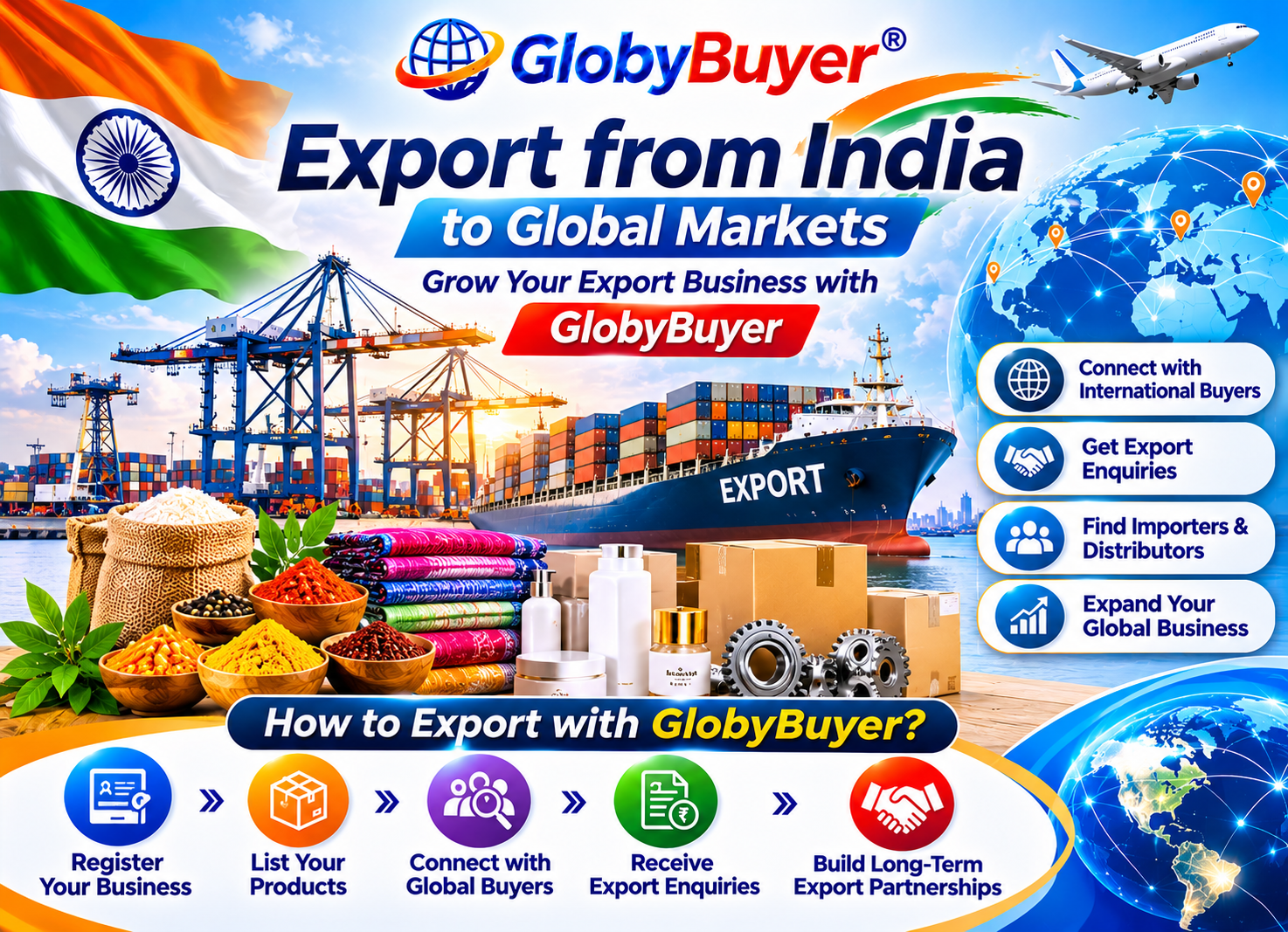
Step 1: Register Your Business on GlobyBuyer
Create your business presence on GlobyBuyer and provide accurate company information.
Include:
Company name
Business description
Manufacturing or supply details
Business location
Contact information
Product categories
A complete business profile helps potential buyers understand your company.
Step 2: List Your Products
Upload your products with relevant information, including:
Product name
Product specifications
High-quality product images
Available sizes and variations
Minimum Order Quantity (MOQ)
Packaging details
Manufacturing capacity
Indicative pricing, where appropriate
Make your product listings clear and informative to help overseas buyers evaluate your offerings.
Step 3: Reach Potential International Buyers
Use your GlobyBuyer business presence to increase product visibility and explore enquiries from buyers interested in your product categories.
Potential business connections may include:
International Importers
Wholesale Buyers
Overseas Distributors
Trading Companies
Bulk Purchasing Businesses
Retail Supply Companies
Step 4: Respond to Buyer Enquiries
When you receive a relevant enquiry, respond professionally.
Share:
Product catalogue
Product specifications
MOQ
Pricing and quotation
Production lead time
Packaging information
Shipping terms
Quick and clear communication can help move a potential enquiry towards a business discussion.
Step 5: Build Long-Term Export Relationships
Export business is not limited to one order.
Focus on product quality, timely communication, transparent commercial terms, consistent supply and reliable after-sales support.
Developing long-term relationships with international buyers and distributors can help create repeat business opportunities.
5. Which International Markets Should Indian Exporters Explore?
Indian exporters can research multiple international markets depending on their product category.
Some potential regions include:
Middle East
UAE
Saudi Arabia
Oman
Qatar
Kuwait
North America
United States
Canada
Mexico
Europe
Germany
United Kingdom
France
Italy
Netherlands
Asia-Pacific
Bangladesh
Nepal
Sri Lanka
Singapore
Malaysia
Indonesia
Australia
Africa
South Africa
Kenya
Nigeria
Tanzania
Egypt
These are potential markets to research, not guaranteed demand destinations. Exporters should evaluate product-specific import regulations, tariffs, competition and buyer requirements before entering any market.
6. Important Tips for Getting Export Orders from International Buyers
If you want to develop your export business, focus on the following practices:
Maintain a professional company profile.
Upload clear and accurate product information.
Offer competitive quotations based on your costs and target market.
Understand the buyer's requirements before sending quotations.
Respond to international enquiries promptly.
Provide samples when commercially appropriate.
Understand international shipping and payment terms.
Verify buyer credentials before entering into a transaction.
Maintain product quality and export documentation.
Build relationships with potential overseas distributors and importers.
7. How GlobyBuyer Helps Indian Manufacturers Expand Globally
For manufacturers and suppliers looking to grow beyond domestic markets, having a digital B2B presence is an important part of international business development.
GlobyBuyer aims to bring manufacturers, suppliers, international buyers and distributors together through a product-focused B2B marketplace.
Businesses can use the platform to:
Showcase products across multiple business categories.
Create a digital company presence.
Improve product discoverability.
Explore potential international buyer connections.
Connect with businesses looking for bulk purchasing opportunities.
Develop distributor and wholesale business relationships.
Expand their business networking beyond local markets.
Whether you are a small manufacturer, established supplier, wholesaler or trading company, GlobyBuyer can be an additional channel in your international business development strategy.
8. Frequently Asked Questions (FAQs)
Q1. How can I export products from India?
To start exporting, establish your business, obtain an IEC where required, complete applicable GST and product-specific compliance, identify overseas buyers and arrange export documentation and shipping.
Q2. Is IEC mandatory for exporting from India?
An IEC issued by DGFT is generally required for commercial exports, subject to applicable exemptions.
Q3. How can I find international buyers for my products?
You can explore B2B marketplaces such as GlobyBuyer, trade exhibitions, export promotion councils, business associations and international buyer-seller networks.
Q4. Can small manufacturers export products from India?
Yes. Small manufacturers can explore international markets, provided they meet the applicable export, product quality, documentation and destination-country requirements.
Q5. Which products have export opportunities from India?
Agricultural products, spices, textiles, garments, engineering goods, chemicals, packaging materials and consumer products are among the categories Indian businesses can research for export opportunities.
Q6. Can I find international distributors through GlobyBuyer?
GlobyBuyer provides a B2B marketplace for manufacturers, suppliers, buyers and distributors to explore business connections and potential trade opportunities.
Q7. What documents are required for exporting goods from India?
Common documents include a commercial invoice, packing list and shipping bill, along with a bill of lading or airway bill. Additional documents depend on the product and destination market.
Conclusion: Take Your Indian Business to Global Markets with GlobyBuyer
Exporting can open new business opportunities for Indian manufacturers, suppliers and wholesalers. However, success requires the right products, market research, export compliance, reliable buyers and consistent business communication.
If you are planning to take your products beyond India, start building your international business presence today.
Join GlobyBuyer and explore opportunities to connect with potential international buyers, importers and distributors.
Visit: https://globybuyer.com/
GlobyBuyer – Your Gateway to Global Buyers, Suppliers & Distributors.
← Back to blog