Wholesale vs Retail Business
Wholesale vs Retail Business – Differences, Investment and Profit Opportunities
26 Nov 2026
Are you planning to start a new business but confused between wholesale and retail?
Both business models offer opportunities, but they operate differently in terms of customers, investment, inventory, pricing and sales volume.
What Is a Wholesale Business?
A wholesale business involves purchasing products in large quantities and reselling them to other businesses.
Wholesale businesses generally focus on:
- Bulk product purchasing
- Manufacturer relationships
- Distributor networks
- Retailer supply
- Institutional orders
- Inventory management
For example, a wholesale trader may purchase 5,000 units of packaged food products from a manufacturer and distribute them to multiple retail stores.
What Is a Retail Business?
A retail business sells products directly to end consumers.
Retail businesses generally focus on:
- Individual customers
- Store management
- Customer experience
- Product presentation
- Retail pricing
- Local marketing
Examples include grocery stores, electronics shops, clothing stores and cosmetic retailers.
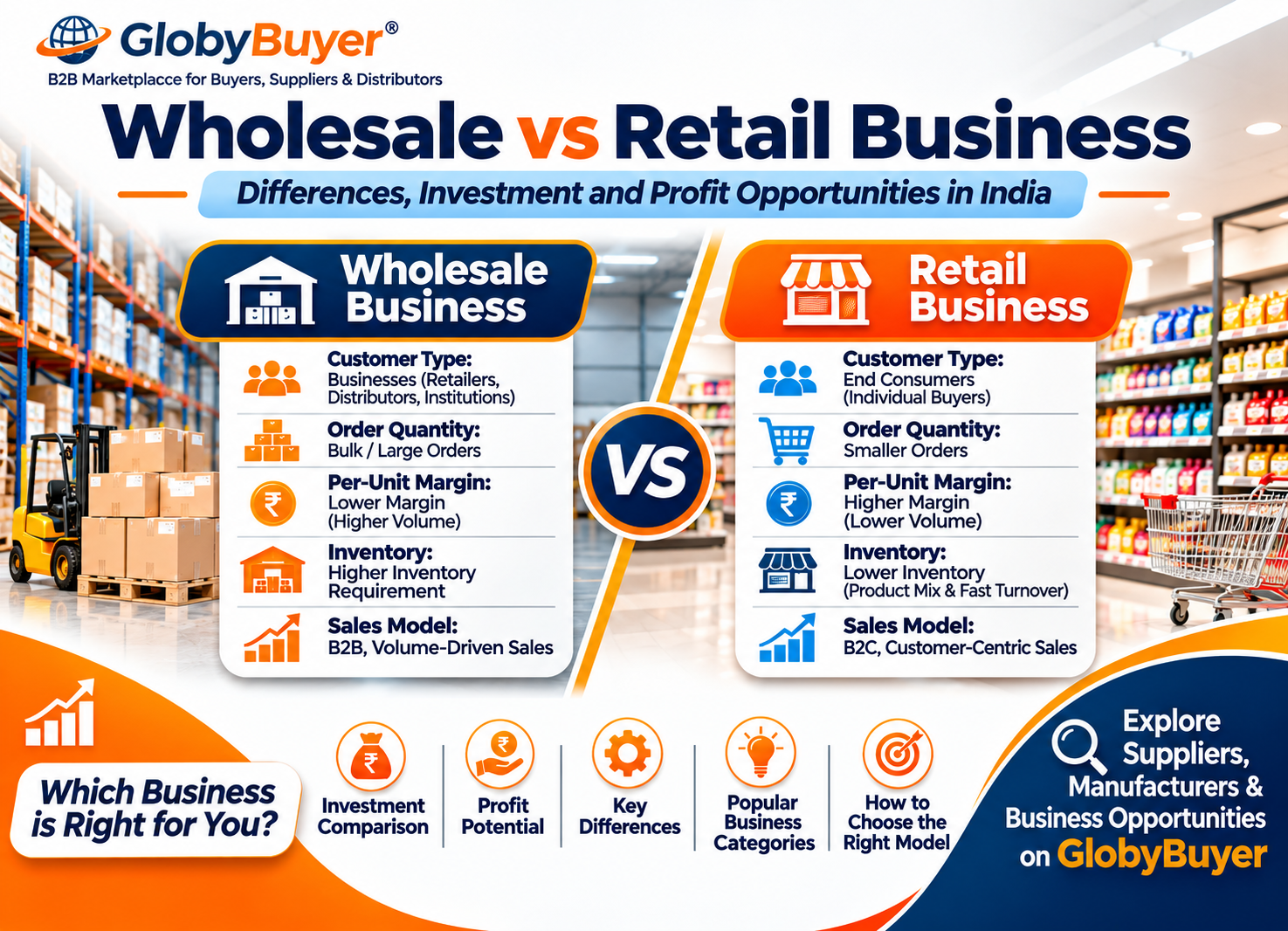
Wholesale vs Retail Business: Key Differences
Factors Wholesale Retail
Customers Businesses End consumers
Order quantity Generally large Generally small
Selling price Wholesale pricing Retail pricing
Inventory Bulk stock Customer-oriented stock
Business relationships Manufacturers and retailers Consumers and suppliers
Marketing B2B sales and relationships Consumer marketing
Sales model Volume-driven Transaction-driven
Which Business Requires More Investment?
Investment depends on the product, location, business size and operating model.
Wholesale business investment may include:
- Bulk inventory
- Warehouse
- Transportation
- Sales team
- Working capital
- Business operations
Retail business investment may include:
- Shop rent
- Store interiors
- Inventory
- Billing systems
- Employees
- Local promotion
A small wholesale trading operation can start with limited inventory, while a large retail showroom may require substantial infrastructure investment. Neither model has one universal investment requirement.
Which Business Offers Better Profit Opportunities?
Wholesale businesses often work with lower per-unit selling margins and higher sales volumes.
Retail businesses may achieve higher per-unit margins, but they also face store expenses, customer acquisition costs and inventory risks.
Actual profitability depends on:
1. Product category.
2. Purchase and selling price.
3. Competition.
4. Operating expenses.
5. Inventory turnover.
6. Customer payment behaviour.
7. Supplier terms.
Do not judge a business only by its gross margin. Calculate net profitability after all expenses.
Popular Wholesale Business Categories
Entrepreneurs can explore wholesale opportunities in:
- Food and beverages
- Electronics and electricals
- Health and beauty
- Textiles and garments
- Packaging materials
- Agricultural products
- Building materials
- Industrial machinery
Can You Start With Wholesale and Expand Into Retail?
Yes. Some businesses begin with wholesale trading and later establish retail outlets or online selling channels.
Similarly, retailers can expand into wholesale supply when they develop stronger manufacturer relationships and sufficient working capital.
This approach can create additional revenue channels, but expansion should be supported by proper inventory and financial planning.
How GlobyBuyer Supports Wholesale and Retail Businesses
Finding the right manufacturer or supplier is important for both wholesale traders and retailers.
GlobyBuyer helps businesses discover manufacturers, suppliers and product opportunities across multiple industries.
Whether you are sourcing products for retail stores or building a wholesale distribution network, GlobyBuyer can help you explore B2B connections.
Explore product categories and connect with manufacturers through GlobyBuyer.
← Back to blog